
Questions over why it’s taken so long to remove ‘trip hazard’ bollards in Leighton Buzzard
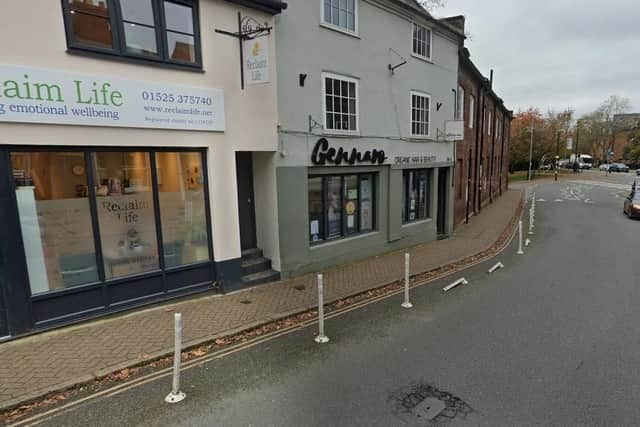
Bollards in Bridge Street, Leighton Buzzard, have finally been removed, but questions are being asked over the delay in taking them down.
The bollards were installed in Bridge Street about five years ago, during Covid, but some have collapsed on the ground, causing a trip hazard.
Several complaints have been made to Central Beds Council, which maintains the road, of accidents involving pedestrians who have tripped and fallen.
They include a legal claim made by Jilly Fernandez, from Leighton Buzzard, who ended up in hospital with severe facial injuries when she tripped over one of the collapsed bollards.

She said she needed titanium plates in her face after she broke her nose, arm, her eye socket in three places, and chipped her cheekbone.
She was out shopping and caught her foot on the fallen bollard, when crossing the road on December 12.
A decision to finally remove the bollards has largely been welcomed.
Harry Palmer, Reform UK candidate for Dunstable & Leighton Buzzard, had called for action over safety concerns.
He stated on the Party’s Facebook page: “Broken Bollards on Bridge Street finally removed – but It shouldn’t have taken this long.
“Despite several residents requiring medical attention, including one woman who ended up in hospital after tripping on a fallen bollard back in December, the council had, until now, failed to take action on the dangerous and broken bollards on Bridge Street.
"I’m pleased to inform you that, following my repeated safety concerns, Central Bedfordshire Highways has finally removed the broken bollards. They have also confirmed there are no plans to reinstate them.
“Conveniently, the council always seems able to find funding for other projects, but when it comes to addressing an obvious and immediate safety risk to residents, action has been painfully slow. Hopefully, this long-overdue removal marks a turning point in how seriously pedestrian safety is prioritised in our town.”
However Victoria Harvey, councillor for Leighton Buzzard West, argues that the upright bollards did not cause a trip hazard and were installed as a safety measure on a very busy road.
She said: “The trip hazards were caused by the broken bollards, which left small circular obstacles on the road or poles lying sideways on the ground.
“These were very dangerous trip hazards and should have been fixed months ago. The bollards that were not broken did not cause any trip hazards. If there is a broken paving stone which is a trip hazard, the council should mend the broken paving stone to make the pavement safe, not remove the whole pavement.
“Bridge Street is a main route into town for many people on foot and there is a large school opening out on to Bridge Street as well as school children accessing Pulfords. The pavement on the south side of Bridge Street is very narrow and there is a big blind bend as you go into Church Square. There is also a convenience store on opposite side of Bridge Street to the school meaning that school children cross over the road to reach it.
“Before the bollards were installed, cars used to park on the double yellow lines, sometimes on the pavement, meaning that children, elderly people, wheelchairs, and buggies had to walk in the road as there was not enough space on the pavement.
It was also then difficult for cars and buses to get through as there was parking on both sides. Cars and buses had to wait as with parked cars it was too narrow for two cars to pass each other easily. The sharp bend from Church square means that it is difficult to see pedestrians. If there are parked cars and pedestrians coming out from between the cars, then it is very difficult for a driver to see pedestrians crossing the road. It was a chaotic and dangerous situation.
"The wands basically created a decent sized pavement and prevented cars parking along that side of the street which meant that there could be two-way traffic without hold-ups and pedestrians could be safe. It meant that elderly and children did not have to walk in the road and kept the area clear of cars so that you could see the cars coming round the bend if you were crossing the road. If you were in a car coming from Church Square you could clearly see the pavement and the pedestrians and the children.”
A spokesperson for Central Bedfordshire Council previously stated it could not comment of any individual ’active personal injury claims’ but added: “The wands were initially introduced during Covid to allow social distancing in the area. As there is no longer a requirement for additional space, they were removed on June 13.”