
Murdered Bedfordshire toddler ‘was becoming invisible’ to authorities says safeguarding report

A toddler from Bedfordshire who was beaten to death by her mother’s boyfriend had been failed by multiple agencies – including Central Bedfordshire Council – leading up to her murder, a report has found.
Isabella Jonas-Wheildon, two, was found dead in the bathroom of an Ipswich flat in June 2023. Her lifeless body had been pushed around in a pushchair for three days by her mother, Chelsea Gleason-Mitchell, and her boyfriend, Scott Jeff.
Jeff, 24 and of Sandy, was jailed for life with a minimum term of 26 years after he was found guilty of Isabella's murder. And Gleason-Mitchell, of Biggleswade, was jailed for 10 years after she admitted to causing or allowing the death of a child. Her sentence is set to be reviewed and could be increased.
A review into Central Bedfordshire’s child safeguarding practice was published this month and criticised the various local authorities and agencies that had come into contact with Isabella in the years, months and days before she was killed.
The NSPCC called the cruelty and brutality that Isabella suffered at the hands of Scott Jeff “shocking and heart breaking”. A spokesperson for the charity said: “It is devastating to read that opportunities to protect this little girl were missed by professionals on a number of occasions.”
Central Bedfordshire, Suffolk, and Norfolk Safeguarding Children Partnerships sent their condolences to Isabella’s family in a joint statement addressing the findings.
It read: “All of the agencies involved accept the review findings and work is already underway to implement the recommendations.
“The circumstances of Isabella’s death have had an enormous impact on her family, friends, those who knew her, and professionals who worked with the family. This has been a case that has touched many people across our counties, and all the Safeguarding Partnerships involved in this statement have been truly shocked.”
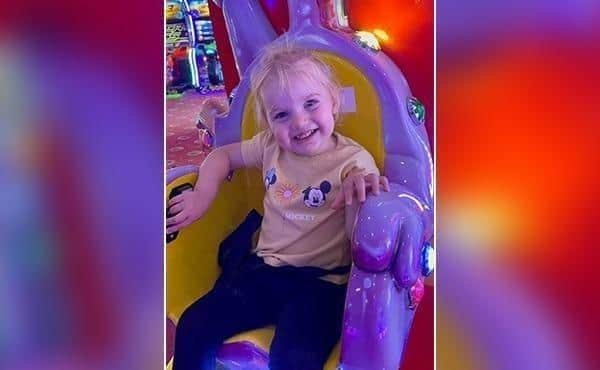

On June 6 2023, Isabella’s maternal grandmother called Hertfordshire Constabulary saying she was concerned that her daughter had taken the tot to Great Yarmouth with her new boyfriend.
The report noted missed opportunities between police forces to alert each other to the situation.
The review author, Russell Wate, said: “Hertfordshire Constabulary could have alerted Bedfordshire Police to the contact of June the 6th, given that the subjects had been resident within Central Bedfordshire. They could have also notified Norfolk as they had been told that Isabella was there.”
The transfer of cases between areas was called “problematic” but “not unique to this case”. The report read: “It can too often lead to episodic and often ‘siloed’ decision making particularly when a family moves from place to place.”
While Isabella lived in Central Bedfordshire, numerous agencies, including Bedfordshire Police and Suffolk Constabulary, were involved with her across four different local authority areas after the family travelled to Norfolk and Suffolk.
The review stated: “The change in Isabella’s visibility to family members and professionals from the beginning of June 2023, should have altered professionals’ decision making, as no one was seeing her and Isabella was becoming invisible.”
The document detailed Isabella’s mother’s mental state before giving birth, including previous suicide attempts and vulnerabilities, and that there were concerns for her before the pregnancy.
The report stated: “There is no culture of joint visits with the Midwife and Health Visitor to antenatal service users who have a history of vulnerability, for them to assess and agree a care plan. This is a missed opportunity to provide a joined-up care pathway for parents who may have additional needs but do not appear to meet the thresholds for Children’s Social Care.”
The couple and Isabella stayed in five different places in Norfolk and asked for help to find accommodation.
Central Bedfordshire Council was criticised for not referring Isabella to Norfolk County Council Children’s Services when they alerted Great Yarmouth Housing to the situation, “even though abuse and neglect were identified.”
Records from CBC Children’s Services stated: “I am worried about parents. They are refusing to tell us where they are staying tonight. We know they have no money and no links to the area. We may need Police assistance.”
When Jeff's surname was given to CBC’s Children’s Services by Great Yarmouth Borough Housing, it was not correctly spelt.
A police officer visited the family while they were living on the beach in a tent on June 16. Gleason-Mitchell referred to a concerned citizen who had been helping her to find accommodation and had been referred to in police reports as her ‘domestic abuse worker’.
The report stated: “...which was not in fact the case and has since proved misleading as this was someone acting as a concerned citizen.”
The police had acknowledged that the situation was not ideal for Isabella, as temperatures were above 30 degrees and “their own assessment was that there was not enough food, water, nappies, and the only shelter the family had, was the tent”.
Mr Wate said: “However, this did not lead to a Strategy Discussion because it was deemed the family had been helped from the ‘domestic abuse worker’ (concerned citizen) and members of the public and the family had been offered and were taking up emergency temporary accommodation in Norfolk over the weekend.”
After speaking with Gleason-Mitchell, it was “apparent to the CBC Team Manager” that she was now prioritising the needs of her new boyfriend over her child, which she agreed to be true during her trial.
Whilst staying at the hostel in Suffolk, the hostel staff, on reflection, never remember seeing Isabella out of her buggy. It is estimated that Isabella when found, had been dead for approximately three days.
The review said that plans to cold call and catch the family at home could have been made.
The report read: “It meant that because no other agency had eyes on Isabella, her exact circumstances and the level of risk she was exposed to, was unknown and unassessed.”
A risk assessment of Scott Jeff, who had ADHD, was that he was of moderate risk to others, as he “has the urge to hit out” and “the risk of committing a criminal offence was assessed as high”.
From June 2023 until Isabella’s murder, the main point of contact with the family was directed through Jeff, which was noted as being a “sophisticated level of coercive control”.
The report read: “...his telephone number was used as the main contact point, without effective professional curiosity about his level of responsibility and the safety of Isabella.”
The review said that a “lack of escalation was evident” among agencies involved with Isabella.
Mr Wate said: “Isabella’s voice or her lived experience was not seen at all during the last month of her life and not demonstrated in professionals’ actions.
“The lack of knowledge of who Isabella’s mother’s boyfriend was and an examination of his records, in particular his autism, ADHD and mental health records, and what were the risks he could pose to Isabella’s mother and Isabella, were never considered.”
He added: “Good information gathering happened but no multi-agency discussions took place, in particular when the concerns for Isabella were rising during the crucial June 2023 period.”
In response to the findings, the partnerships’ joint statement continued: “All of the agencies involved accept the review findings and work is already underway to implement the recommendations. To avoid delay in implementing learning, the draft recommendations were shared with all the agencies involved and the draft report was also shared with the National Panel, the body that oversees all Local Children’s Safeguarding Practice Reviews.
“The Safeguarding Children’s Partnerships will work with agencies to ensure that recommendations are implemented.”