
Bedfordshire Fire Service and union clash over "dangerously low" crew numbers
Bedfordshire Fire and Rescue Service is facing a formal dispute with the Fire Brigades Union (FBU) – which says plans to delay firefighter recruitment “presents an unacceptable risk”.
The fire service has decided to delay firefighter recruitment until April 2026 and permanently remove the county’s Rescue Support Unit (RSU) based at Stopsley.
But the Union says this “presents an unacceptable risk to firefighters and the public”.
In a letter titled “Failure to Agree Changes to the Grey Book Establishment and removal of the RSU,” the union states: “The Bedfordshire FBU committee cannot endorse this proposal and therefore registers a failure to agree over its introduction. The committee has furthermore agreed for officials to seek approval on registering a dispute on this proposal.”
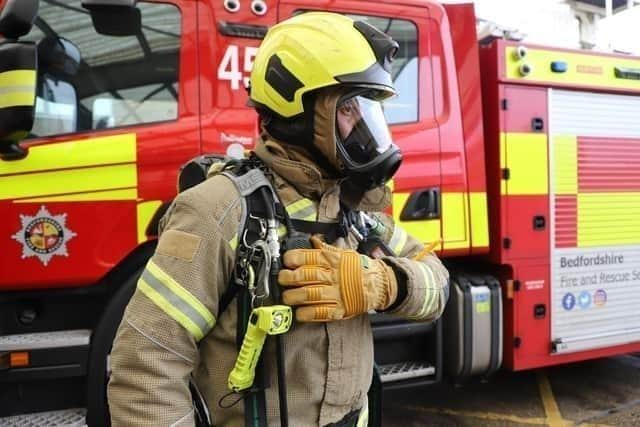

The decision, part of a wider cost-saving strategy expected to save £740,000 this financial year, was presented in a budget monitoring report to the Bedfordshire Fire and Rescue Authority (FRA) on July 15, 2025.
The report said there will be a temporary reduction in the firefighter establishment, following the decision to delay recruitment.
“This is expected to deliver a non-recurrent in-year saving of around £740k, with further work to firm up this estimate, along with associated savings,” the report said.
The FBU said this would cause firefighter numbers on wholetime stations to temporarily fall from 229 to 205.
It added that Bedfordshire FBU members are “appalled” the decision to pause recruitment and cut up to 24 posts was taken “without any official negotiation” with the union—and instead “waste money” on “flawed vanity projects”.
Fire Brigades Union executive council member and serving Bedfordshire firefighter Jamie Newell said: “Risk management planning is the responsibility of the Chief Fire Officer. Failing to identify crewing shortfalls that will leave the public facing a dangerously low number of firefighters available to respond to incidents is an abject failure of leadership—the likes of which I’ve not witnessed in two decades in the service.
“To rub salt in the wound, firefighters have seen the number of chief officer roles in the brigade increase—from three to five—meaning there is now one senior officer for every wholetime station.
“Some of these posts have been filled without any transparent process. It’s taxpayers who foot the bill, while frontline firefighters are left dangerously understaffed.”
Bedfordshire Fire and Rescue Service (BFRS) defended its position, stating it has “enough firefighters to crew fire engines”.
Assistant Chief Fire Officer Jim Davies said: “We completely agree with the FBU: resources must be directed to where they are needed most to maintain a safe and effective response to emergencies.
“We currently have enough firefighters to ride fire engines to give the people of Bedfordshire the emergency service they deserve.”
BFRS told the Local Democracy Reporting Service (LDRS) it is not reducing numbers.
A spokesperson said: “The increase in senior leadership is another example of how the Service is resourcing to risk in response to the changing profile of Bedfordshire.
We’re already planning for our changing county, working on a new Community Risk Analysis that will look at what we need and where we need it to deal with the risks of Bedfordshire; we need to keep pace with our growing county.”
The 2025/26 Budget Monitoring Report, presented to last week’s Fire Authority meeting, forecasted a £740k saving from pausing recruitment, despite minor budget pressures from above-inflation pay awards.
Councillor Jacqui Burnett, chair of the Bedfordshire Fire and Rescue Authority, said it was “disappointing” that the FBU was suggesting firefighter numbers could reach a critical level.
“At no point do we reach anything approaching a critical level in terms of firefighter numbers, and it’s disappointing this is being suggested as the FBU has had the details clarified to them more than once.”
“Bedfordshire is fortunate to have experienced, talented and, in some cases, nationally recognised leaders who run a service that delivers for the public day in and day out.”
Councillor Burnett added that Fire Authority members had been fully briefed on recruitment plans.
“Recruitment timescales have been shared with Member colleagues, and we are assured the Service has appropriate plans and policies in place so that both business-as-usual activities and peak demands, like wildfires and flooding, are being resourced adequately.
The Service is thinking ahead to ensure cover and protect the public when it most matters, beyond the artificial boundaries of financial years. That’s what good forward planning is all about.”