
Hidden in Plain Sight - a series of articles by Leighton Buzzard resident Michael Coram
The River Ouzel - one of the world’s rarest habitats.
Leighton Buzzard is a special place - it has a market that dates back to 1086 when the size of its population put it in the top 20% of settlements in England. How did it do so well and how did it manage to continue with this success up to the present day?
We have a canal, mainline rail services, the M1 runs nearby, both planes and cars have been built in our workshops and due to our location we are a transport hub. However at the centre is the quiet beating heart of the humble river Ouzel.
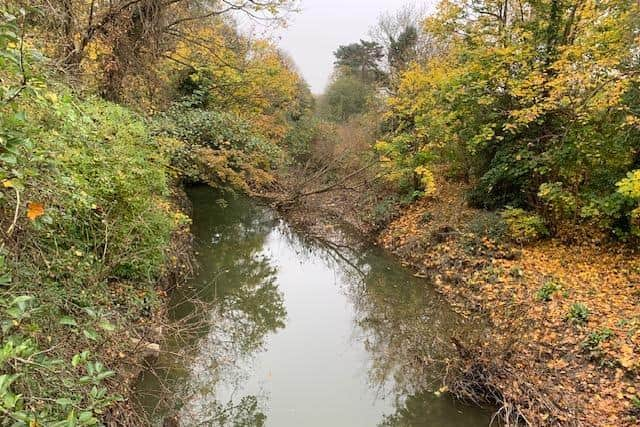
Did you realise that when you glance over the bridge in town you are looking at what, David Attenborough says, is ‘one of the rarest habitats on Earth’?


The Bedfordshire and Luton Geology group states that The Ouzel ‘begins as a chalk stream rising from a spring near the Dunstable Downs’ - thus ensuring that we have a vibrant river ecosystem. Its stable, cool water encourages some of our most iconic aquatic and terrestrial species- e.g. kingfishers, damselflies, otters, trout and grayling, not to mention eels, bats, lizards, badgers, adders, grass snakes and voles.
Chalk is an aquifer which means it is able to soak and hold water a bit like a sponge - water moves through a complex underground network of tiny pores and cracks called fissures and when it finally emerges it is both filtered and mineral rich. These minerals feed micro organisms that in turn become food for an incredible variety of insects. Beneath the streams is a hidden dark world where tiny crustaceans live; there are also very rare white -clawed crayfish. Water voles have been spotted in central Leighton and a special effort is being made to encourage these tiny mammals to breed in the area.
The presence of Waterborne Walk shopping centre reminds us that we host some of the most mysterious watercourses in the country; due to the fact that some local chalk streams dry out in summer they are named winterbournes, they host very rare species of insects that require both wet and dry life cycles. At least six chalk springs emerge within a few miles of Leighton and some have watercress beds.
A brief history of chalk streams reveals that from the earliest of times humans regarded water as a focus for activity. The very first inhabitants in Leighton would have found the Ouzel useful as a resource for drinking water, cooking and food, The Domesday Book mentions that Leighton has a ‘meadow’. After the Norman Conquest meadows were a distinct and valuable category of land. They were a central part of medieval life and our meadows (we still have 34 acres) were enriched by a constant flow of water.
Recent data makes it clear that freshwater species are declining faster than other habitats, so I am glad to finish with some good news, Last month a project aiming to restore and protect Chilterns’ chalk streams has received a Lottery grant worth £351.083. Interestingly the Chilterns National Landscape project aims to conserve a ‘cultural heritage which spans ‘ hundreds of years. A heritage that is clearly evident in Leighton today.