
Home to school transport change could lead to extra 1,600 vehicle journeys per day in Central Bedfordshire
CBC's home to school transport policy change could encourage 1,600 extra vehicle journeys per school day, meeting warned
A policy change approved for home to school transport in Central Bedfordshire could create 1,600 extra vehicle journeys daily, a meeting was warned.
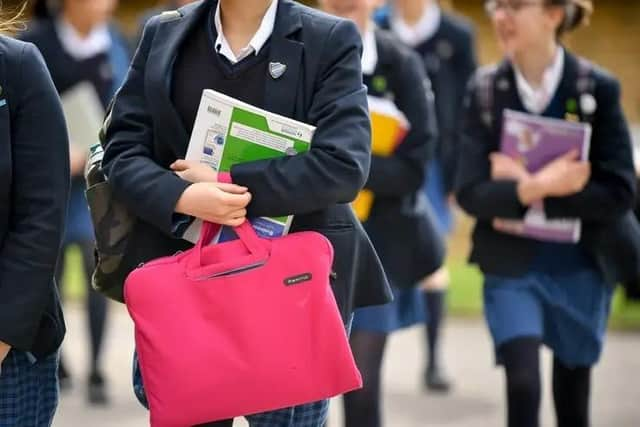

Central Bedfordshire Council will only provide mainstream home to school transport to a child’s nearest suitable school from September 2026, under a revised proposal agreed at an extraordinary executive committee meeting.
Chief executive officer of the Pyramid Schools Trust Steve Kelly, representing a group of local education leaders, explained: “This policy will create completely new catchment areas entirely unrelated to a school’s ability to house pupils.
“Some will be bursting at the seams, while others will languish with empty classrooms. The proposal would have a catastrophic financial impact on many schools.
“Within my trust alone, this would be around £2.5m a year in lost revenue. It could create around 1,600 extra vehicle journeys each school day, which is scandalous as regards sustainability and congestion.”
Principal of Samuel Whitbread Academy in Shefford Nick Martin, on behalf of local schools, said: “Our objection is around the timing of the change and the impact it would have on the families in our cluster, not the proposal itself.
“To be financially viable, Samuel Whitbread and Robert Bloomfield Academy need to attract pupils from way beyond Shefford and we won’t be their nearest school.
“We’ve a private finance initiative (PFI) commitment of more than £2 million a year, which we share with the local authority. The only reason we meet this expense is through economies of scale and by being full to capacity.”
Conservative Heath and Reach councillor Mark Versallion said: “It’s regrettable the council has tried again with this policy, as I feel the fundamental issues remain.
“I could ask you not to proceed today and work more closely with schools, as well as with scrutiny. I’ve seen evidence around arguments that the council hasn’t done enough to engage with some of the school clusters badly affected.”
Liberal Democrat Leighton Linslade South councillor Shaun Roberts described the policy change as “all about cost, as the council has financial issues it needs to address”, asking: “How confident can we be the figures in front of us are accurate?”
The Central Bedfordshire Community Network councillor Hayley Whitaker referred to the chance to work further with headteachers, adding: “Take that offer, as without that level of clarity this change could have such an impact and cause so much damage.”
In a statement, executive member for children’s services and Independent Leighton Linslade West councillor Steve Owen said: “This decision makes the policy fairer to all families and is the best use of public money, while meeting our statutory duty.
“Parents and carers still have a choice about where to send their children to school. But it’s important for them to factor in travel costs, if they choose a school which isn’t the nearest to their home. We must balance the views of service users with our duty to all taxpayers.
“Having considered the impact of the policy change on families, an exception for siblings is included. This means younger children can continue to access school transport, if their time at a school overlaps with an older sibling.
“The change to the policy will help us manage the rising costs of providing home to school transport. We can no longer afford to transport children past perfectly good schools to those further away.
“Improving educational performance is very important to us and our intention is to use some of the money saved for this purpose.”