
Maternity services at Bedford and Luton hospitals AGAIN rated as inadequate
Bosses at Bedford and Luton & Dunstable hospitals have said sorry after maternity services were again rated as inadequate.
Inspections in June and July last year followed up on improvements ordered by the Care Quality Commission, the body that oversees hospital inspection.
But the CQC reported only minimal improvements had been made, with the services remaining in breach of regulations around staffing and management, and were now also in breach of regulations relating to safe care and treatment.
The CQC said it placed conditions on the services’ registration requiring rapid improvements to risk management, how it effectively governed the service, and ensuring staff completed mandatory training required to keep women and their babies safe.
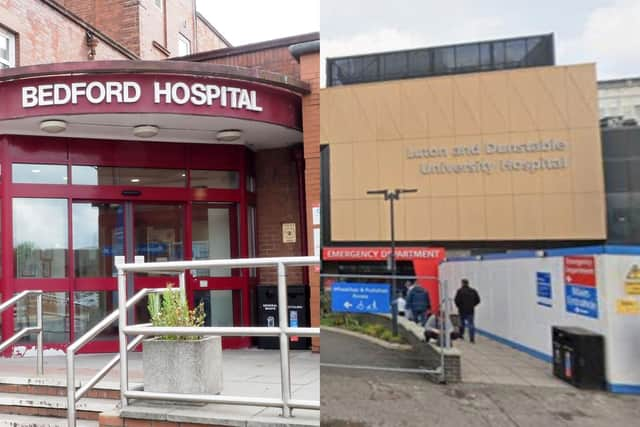

An action plan reassured CQC that immediate action was to be taken to address the issues. But after a follow-up inspection, CQC again rated maternity services at both hospitals as inadequate.
Caring remained rated as good, while responsive and effective remained as requires improvement.
In a statement, Bedfordshire Hospitals NHS Foundation Trust said it accepted the CQC’s findings and “that our maternity services did not consistently meet the standards of care we aspire to give and where our service has fallen short, we are sorry. Women and babies deserve consistently safe, high‑quality care.”
David Carter, Chief Executive at Bedfordshire Hospitals, said: “As a Trust committed to delivering excellent care, the latest CQC inspection rating for our maternity services was disappointing for us to hear but we remain focused in our effort on ensuring that our maternity services consistently meets the standards of care we aspire to give.
“We are sorry where care has not met the standard our community rightly expects, and our leadership teams will continue to work hard in removing obstacles to allow our maternity colleagues to provide the best care.
“Since last summer’s inspection we have strengthened staffing and senior clinical oversight, expanded staff development and wellbeing support, and opened state‑of‑the‑art maternity facilities in our new Acute Services Block at the L&D.
"At Bedford, we’ve introduced a dedicated telephone triage midwife, new ‘mini switchboard’ phone triage service and a private triage area to improve access, privacy and dignity. We will keep our community updated as we deliver further improvements.”
In its report on the maternity services failings, Carolyn Jenkinson, CQC deputy director of hospitals in the East of England, said: “We were deeply concerned that improvements in maternity services were happening too slowly, with little change since our previous inspection. While we found caring staff, poor leadership meant both they and the women using the services were being let down.
“At this inspection, low staffing level was having the biggest impact on women’s experiences. Access to services was often delayed at both hospitals. The triage service was frequently understaffed, and at Bedford, our inspectors saw 451 calls out of 2,097 went unanswered or abandoned by the caller due to wait times, putting women at risk of not receiving the care they needed.
“Low staffing level also limited women’s choices. At Bedford Hospital, the elective caesarean service for women who were high risk and unable to labour was paused 32 times over a six-month period because there weren’t enough staff to support those who didn’t require emergency care.
“At Luton and Dunstable Hospital, women also experienced delays to elective caesarean sections as well as induction of labour. We also saw frequent diversions to other hospitals due to staffing shortages, which may lead to distress for women who had made specific plans at their chosen hospital.
“Staff at Luton and Dunstable told us low staffing levels were affecting staff morale and contributing to increased sickness absence, which in turn affected the safety of services. We were very concerned to hear that staff did not always feel safe at work.
“Leaders didn’t ensure staff completed mandatory training or risk assessments, and services were not learning effectively from incidents. Some incidents remained open for more than 60 days. At Luton and Dunstable Hospital, more than 1,500 incidents were open at the time of our inspection, with over 1,100 overdue for investigation or closure, increasing the risk of incidents being repeated.
“We will continue to monitor these services closely, including through further inspections, to ensure improvements are delivered quickly and people are kept safe.”
In a statement the Bedfordshire Hospitals NHS Foundation Trust said it was reassuring to hear that feedback from women the CQC spoke to indicated that “the service provided high quality, compassionate and responsive care.
“Women consistently reported their privacy and dignity were respected and that midwives were attentive in monitoring them and their babies.” and “overall women reported a positive experience with the service and staff.”
The statement added: "Since the inspections last year, the maternity teams — supported by colleagues across the organisation — have delivered significant improvements focused on staffing, staff development and wellbeing, and estates and facilities:
> Staffing and clinical cover: Dedicated telephone triage midwife and a private triage area at Bedford Hospital; Acute Care Oversight (ACO) Consultants providing daily senior oversight at the L&D; extended Day Assessment Unit (DAU) hours (7am to 7.30pm) at the L&D
> Staff development and wellbeing: Wellbeing check‑ins, coproducing with staff the new Anti-Racism & Incivility Charter, working in collaboration with the Nursing & Midwifery Council (NMC) to provide Professional Behaviours training to staff; flexible access to mandatory and maternity‑specific training (PROMPT, fetal monitoring, MSW development) with drop‑in support
> Estates and facilities: Moved into the new Acute Services Block at the L&D (Cedar & Oak Wings) — modern, purpose‑built maternity spaces; community maternity hubs in Bedford (Queens Park and Pine Cones) improving access, privacy, and choice.
> Additional pathway and digital improvements support safety and experience, including a ‘mini‑switchboard’ at Bedford Hospital triage, and a multi‑language online discharge pack co‑produced with our Maternity Neonatal Voices Partnership (MNVP).
Inspectors found at both hospitals:
> Staff didn’t always assess risks to people's health and safety or mitigate them where identified.
> There were significant backlogs of incidents awaiting investigation, and lessons were not consistently learned from incidents and co
mplaints.
> Not all staff completed mandatory training, with particular concerns around medical staff completing safeguarding and emergency training.
> The service had many out-of-date policies and clinical guidelines, including those covering baby abduction, post-partum haemorrhage and sepsis management.
> The trust didn't comply with five of the ten safety actions in the clinical negligence scheme in 2024/25 for trusts maternity incentive scheme.
However, women described staff as attentive and respectful of their privacy and dignity.
Women were able to share their experiences and provide feedback through the local maternal and neonatal voices partnership, which also regularly feeds back to the trust.