
New plaque unveiled to honour secret wartime heroes based near Leighton Buzzard
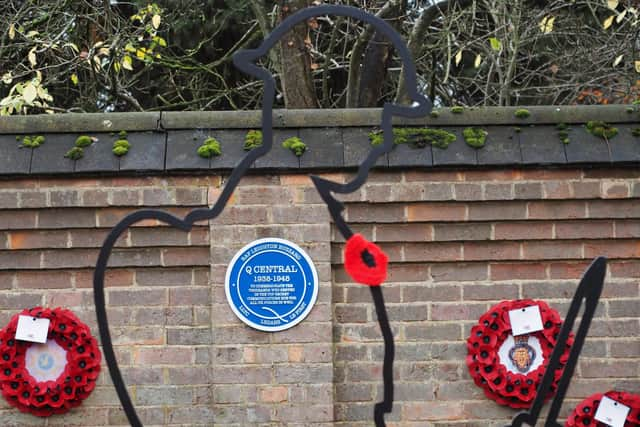
A new plaque honouring the secret wartime heroes based at Q Central near Leighton Buzzard was unveiled on Armistice Day.
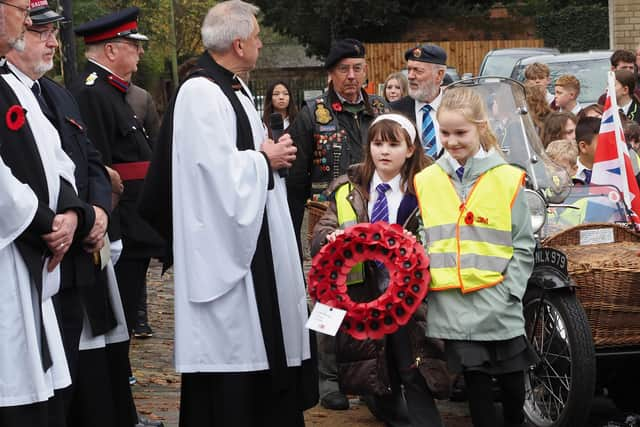
The ceremony on November 11 was held as part of commemorations to mark Armistice Day and was attended by 200 school children from nine Leighton Buzzard schools, veterans including those from the RBL Riders Branch, church leaders and community representatives.
The plaque, designed by Ruby Rose Ellis, was installed on the wall beside the War Memorial at All Saints Church, with the Rev David MacGeoch leading the service.
Q Central, located in Stanbridge, was at the heart of Britain’s wartime communications network. It was the largest telephone exchange in the world located at a camouflaged site where more than 5,000 personnel, many from the Women’s Auxiliary Air Force (WAAF), were stationed. They operated more than 1,100 teleprinters, relaying military orders across the globe.

The work at Q Central was so secret that the Official Secrets Act meant no one was allowed to talk about it until 2013, long after the codebreaking work at Bletchley Park was known.
One of those who worked at the site was Joan Spencer, who lived at Heath & Reach and died last year at the age of 102.
Her granddaughter Justine Pearson attended the ceremony. She said: “It was bizarre really as my son Bertie, who was with one of school groups, was asked to lay a poppy wreath – it must have been fate that he should do it. His middle name is Spencer, after his great grandmother, so we were all very proud.
"She was very secretive about her work but one of the funniest stories she told was when she went out to find her bike had been spray-painted. She spent her lunch break trying to wash all the paint off – not realising it had been painted as camouflage.”
Sandy Flewin’s father Tom Jardine worked for the GPO (General Post Office) and helped install communications at Bletchley Park before moving on to do the same at Q Central. She said: “We lived down the road from Stanbridge and my sister can remember the road to Q Central was always shut off – but we never knew why.
“My father used to go to work and cycle home for lunch. Our neighbours did he same but nobody ever talked about their work which involved keeping track of radar and ships. But I’m quite pleased it has been recognised with the unveiling of this plaque. The work was very important and it’s important younger generations learn about it. If Dad was here now he’d say, ‘I was only doing my job’.”
Gayna Perry’s father Waley worked at Q Central from1943 to 1945 after coming over from Jamaica.
She said: “My father was a Corporal and worked installing radar equipment. It was all top secret, and at the heart of everything. He married a Leighton Buzzard girl (my mother) who was stationed at Linslade while he was at Leighton Buzzard.
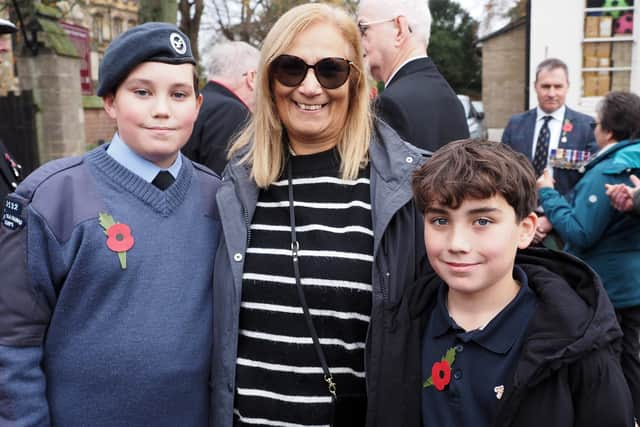
"We were one of only two black families in the town, which was unusual for the time. But my father always said he left Jamaica to go and fight for the Mother Country. He said he felt British, so was really surprised when he had to apply for British citizenship in the 70s.
“My grandsons, one of whom is an Air Cadet at Wolverton, also attended the ceremony yesterday. It was a proud day.”
MP Alex Mayer, who launched the campaign to install a lasting memorial on VE Day 2024, has spoken about the women of Q Central in Parliament and said she was delighted “that the memories of those who served in the shadows are being brought into the light.”
She said: “The women of Q Central were the backbone of Britain’s wartime communications. Their quiet dedication and secrecy were instrumental in shortening the war and ultimately bringing peace to Europe. I’m proud they are finally getting the recognition they absolutely deserve.”
Leighton Buzzard was chosen for its strategic location, close to transport links but without a visible military presence, making it ideal for covert operations. The site coordinated vital military efforts, including the Battle of Britain and the D-Day landings.