
Biogas plant expansion near Leighton Buzzard approved despite parish council objections
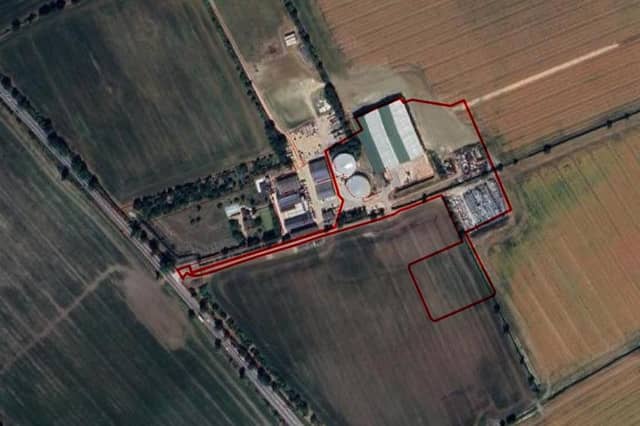

Production capacity at a biogas plant in the south Bedfordshire greenbelt can be boosted to five megawatts of biomethane and site operations developed over nine acres instead of five, despite opposition from a parish council.
The project at an arable farm, off the A5 at Hockliffe, is subject to approval from the Secretary of State for Housing, Communities and Local Government because of its location.
Applicant Trinity Hall Farm and Trinity Hall Biogas submitted full plans to Central Bedfordshire Council to expand its current anaerobic digestion plant with two digester tanks, a digestate storage tank, three feeding units and two slurry intake tanks.
There would be four pasteurisation tanks, an oxygen injection unit, a gas upgrader, a grid entry unit, three propane tanks, a low voltage unit and emergency run-off lagoon, as well as parking, landscaping and an extension to the access track.
The proposals “amount to inappropriate development that would harm the greenbelt”, with moderate impact on the character and appearance of the area, according to report to CBC’s development management committee.
“But it’s possible to mitigate against this harm through a robust landscaping scheme,” said the report. “Wider environmental benefits are associated with biogas production because it’s a renewable energy source.
“The biogas is transferred to a combined heat and power unit to enable conversion into energy. The plant is ideally located to enable a grid connection to export all gas produced.”
Senior planning officer Fenella Hackney explained: “Anaerobic digestion is a process which generates renewable energy through the breakdown of organic matter in an oxygen-free environment, with the digestate product used as a natural fertiliser.
“While the development would be of a large scale, it’s been carefully designed to take advantage of the site’s natural topography and would be mitigated by the landscaping.”
Chalgrave Parish Council objected because the plans involve a 69 per cent expansion of the footprint for the whole site and a tripling of the volume of digestate, with a sixfold increase in energy output generated.
Director of planning consultancy E4environment Deb Cairns said: “The plant has been operational since 2014.
“Production of renewable energy will increase fivefold, with a threefold rise in feed stock. That involves upgrading the gas produced, so it can be injected direct to the grid.
“This takes the plant from a 43 to a 99 per cent efficiency rating, with the heat currently lost reused within the digestion process. Using farm manure products as food stock allows the plant to be a positive part of the circular economy.
“The agricultural sector is estimated to account for more than 80 per cent of the pollutant ammonia through its use of artificial fertilisers, and the storage and spreading of manures and slurry.
“This process enables us to strip off the ammonia, leaving the digestate an even more positive natural fertiliser to improve soil health. The applicant has worked to use as little land as possible, to keep the height below current buildings, and to use the natural topography to locate the large structures and form the basis for drainage and emergency containment.”
Conservative Cranfield and Marston Moretaine councillor Sue Clark described it as “a well-thought-out scheme”, saying: “It fits neatly within the landscape and is satisfactorily screened.” Councillors unanimously approved the project.