
Parents of five-year-old lost to incurable brain tumour donate grandmother's bequest to sponsor research
Parents who lost their daughter a week after her fifth birthday to a brain tumour have dedicated two days of research in her memory after their child’s grandmother left a bequest to her deceased granddaughter.
Leighton Buzzard residents Alan and Michelle Perrott decided to support national charity Brain Tumour Research based in Milton Keynes after Alan’s mother left money in her will to all her grandchildren, including their daughter Leah who died in 2003. The donation was enough to sponsor two days of research.
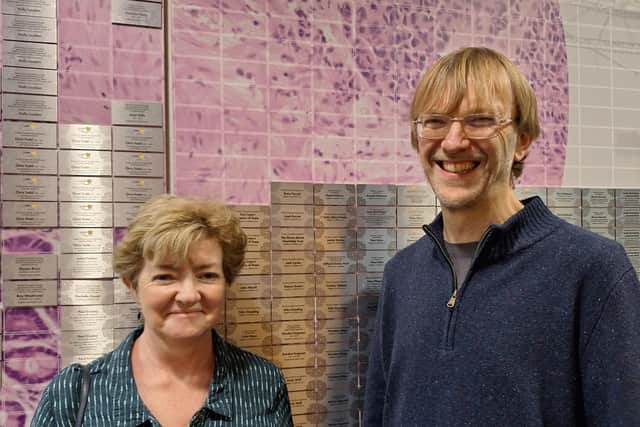
Yesterday (16 January), Alan, along with his wife Michelle, was invited to the Brain Tumour Research Centre of Excellence at Imperial College London to find out how his sponsorship is helping support scientists working to improve the diagnosis and treatment of patients with high-grade glioma, including glioblastoma.
Leah was diagnosed with a diffuse intrinsic pontine glioma (DIPG) (now often known as midline glioma) in July 2003, aged four, after experiencing serious balance issues.

Alan said: “The GP and the consultant and staff at the Radcliffe Infirmary in Oxford (as the hospital was then) were fantastic, but they were very clear that this disease was untreatable. They advised us to make the most of the time we had remaining with Leah.”
Surgeons were unable to operate because of the sensitive location of the tumour and the only treatment given to Leah was dexamethasone (strong steroids) to help her with some of her symptoms, although the side effects from the steroids, including bloating and weight gain, as well as paranoia, were upsetting in themselves.
The couple were well aware that nothing could save their beloved daughter and Leah passed away at home four months later on 14 November 2003, one week after her fifth birthday.
Michelle said: “When Leah was diagnosed, it was devastating to learn that DIPG was such a life-limiting illness. Although there is now the possibility of radiotherapy treatment, it is very gruelling for children and is by no means a cure. Shockingly, the median survival prognosis, 20 years or so later, is eight to 12 months. The Government doesn’t give enough money to research brain tumours and it doesn’t recognise the terrible impact they have on whole families.

“It’s some comfort to think that the donations made in Leah’s memory are helping to make a difference for people diagnosed with brain tumours in the future.”
Brain tumours kill more children and adults under the age of 40 than any other cancer, more women under 35 than breast cancer and more men under 70 than prostate cancer.
Alan and Michelle were given the opportunity to tour the labs at Imperial College, led by principal investigator Dr Nelofer Syed, and spoke to scientists about their work to find a cure.
Alan added: “Sadly, it’s too late for Leah, but I hope the money we’ve donated is life-changing and brings the day closer when a cure is found and families don’t have to go through what we have.”
Charlie Allsebrook, community development manager for Brain Tumour Research, said: “We’re really grateful to Leah’s family for their support and generosity. We hope that their visit to our Centre of Excellence at Imperial College London offered a useful insight into all we’re doing to improve treatment options for patients and, ultimately, find a cure.
“Just under 13% of those diagnosed with a brain tumour survive beyond five years compared with an average of 54% across all cancers, yet just 1% of the national spend on cancer research has been allocated to this devastating disease since records began in 2002. This has to change.”
Brain Tumour Research funds sustainable research at dedicated centres in the UK. It also campaigns for the Government and larger cancer charities to invest more in research into brain tumours in order to speed up new treatments for patients and, ultimately, to find a cure. The charity is the driving force behind the call for a national annual spend of £35 million in order to improve survival rates and patient outcomes in line with other cancers such as breast cancer and leukaemia.
To find out more about sponsoring a day of research, go to: www.braintumourresearch.org/fundraise/sponsor-a-day