
Second World War film honouring the lives of POWs who died in East Asia showing in Leighton Buzzard
A new film honouring prisoners of war who died in East Asia during the Second World War will be shown at Leighton Buzzard Library Theatre on Tuesday, June 3 at 8pm.
The award-winning documentary, The Sinking of the Lisbon Maru, covers a tragic, largely unknown story of the Second World War, when around 18,000 Allied Prisoners of War lost their lives. It also covers the intervention of Chinese fishermen that prevented a bigger catastrophe and features interviews with the last three survivors and family members.
Geoff Haviland’s father, Charles Stephen Haviland, was one of the victims who died.
Geoff, of Leighton Buzzard, said: “In this 80th anniversary year of the ending of the Second World War it is important that there should be an awareness of events in the Far East as well as in the European theatre of war and this story, and many other similar stories have been forgotten and the men involved not recognised and honoured for their sacrifices. This documentary goes a long way to rectifying that situation.”
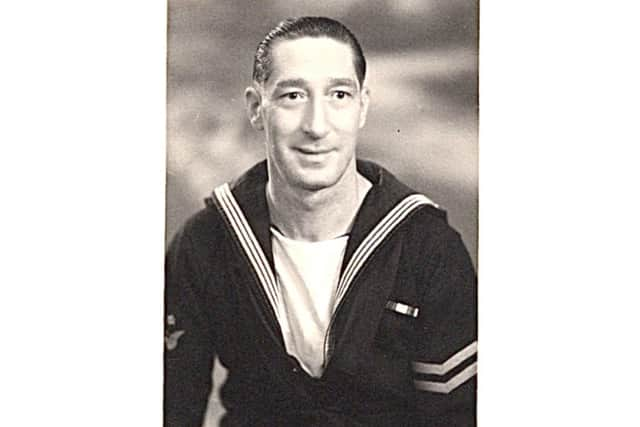

The documentary, now touring the UK, has revived the story which was discovered by a Chinese film maker completely by chance. His dedication took him around the world to search for and to speak to descendants of the men involved.
Geoff added: “The story is totally unique and has touched the lives of hundreds of families who had no knowledge of the atrocities that had occurred. In my own case I knew nothing of the circumstances of my father’s death on the Lisbon Maru until I was approaching my 80th birthday.
“My father was aboard the Lisbon Maru, one of 130 civilian ships commandeered by the military to use as prison ships. It was was one of the first to leave Hong Kong en route to Japan but intercepted by an American submarine, torpedoed on October 1, 1942 and sank 25 hours later taking over 800 men to the sea bed.
"By September of 1942 the Japanese had advanced further into Malasia taking Singapore and thousands more British prisoners. It was necessary for the Japanese to increase manufacturing and transportation and POWs were forced into slave labour to work in the mines, docks and factories but first they had to be transported to Japan.
“Sketchy news of the sinking reached Britain about a month later and was reported in the Press but without details and, with it appearing to be a minor incident compared with the happenings in Europe at that time, it was quickly shelved and subsequently forgotten.
He added: “This is a must-see film. It doesn’t merely tell us of one atrocity but opens our eyes to the brutal conditions that all our service personnel faced in the Far East theatre of war.
“They must be remembered and honoured in the same way as all who have served this country.”
Tickets are available at the library on Tuesday, Thursday and Friday mornings from 10am until noon or by ringing 0300 300 8125.