
Council to review weed control for town’s parks, cemeteries and open spaces
A new weed control policy is needed to combat invasive species in the town’s parks, cemeteries and open spaces, Leighton and Linslade Town Council has been told.
Local authorities are legally obliged to manage invasive plants, including preventing their reproduction and spread on land it owns or manages.
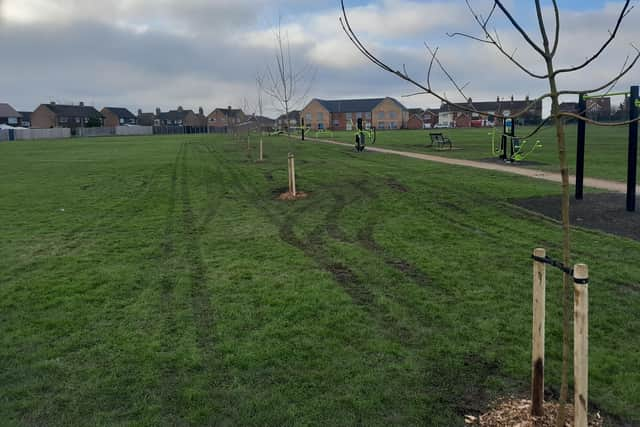

But the problem of invasive weed species has increased dramatically to the point where it is no longer possible to control them, according to a report by the ground and environmental services committee.
A meeting of the council was told current methods are not dealing with the growing issue of weeds with a recommendation to switch back to using glyphosate-based chemicals to control weeds.
However, it suggested serious invasive species such as Japanese Knotweed or Giant Hogweed could be dealt with by specialist contractors.
And it was recommended invasive species be left to nature in wild meadow areas such as The Peace Meadow.
But officers’ recommendations were not carried on the night – with a more researched report due at a later date.
The report stated: “In September 2018 the committee agreed to move away from glyphosate-based chemicals in its approach to weed control and management and since this time, the grounds team have being using Pelargonic Acid (also called Nonanoic Acid) to control weeds in our parks, cemeteries and open spaces.
“Whilst the benefits of using this as opposed to glyphosate-based products is well known, its use has thus far proven far less effective at controlling the weeds and invasive species.
"Since the resolution made in September 2018, weeds and invasive species have increased dramatically to the point where it is no longer possible to control them, the consequence being the inability to effectively deal with them throughout the growing season.”
It noted building development, wind and birds contributed to spreading weeds.
Currently, a pelargonic acid is used as a herbicidal solution but it is only effective as a direct contact only solution.
Officers have also been working with weed control experts in looking at products used in the farming industry as accepted alternatives to dealing with weed control.
According to the report, officers tried other non-chemical methods in August 2025 – including water vapour, blow torch and electric shock treatment to see if a better alternative to going back to chemicals could be found.
But: “In all the trials, the methods were found to be more labour intensive and more costly when compared to chemical spraying. To use non-chemical methods would require a significant increase in the budget to achieve the same result.”
The report concluded: “It is clear we cannot manage the invasive species in our parks and open spaces without the use of a stronger chemical option.
“The additional land we have taken on this past year is of such poor quality in terms of the soil that we are already facing a challenge to improve the soil conditions before we even start to deal with the weeds etc.
“The outbreak of Hemlock in several spots this summer also highlighted that without a chemical option to turn to, the process of digging every stem out of the ground including the root system is labour intensive and not feasible going
forward.
"A better solution would be a stronger chemical application in the spring to prevent it from growing in the first place.”