
Leighton Buzzard woman discovers more than a thousand letters detailing dad's time as a Second World War evacuee in America
A daughter has uncovered mysteries of her late father's childhood after discovering more than a thousand letters from his time as a Second World War evacuee in the US.
Sandy Bennett, 60, is going through a loft-full of cuttings saved by her father Roger of his time living in Massachusetts between 1940 to 1944.
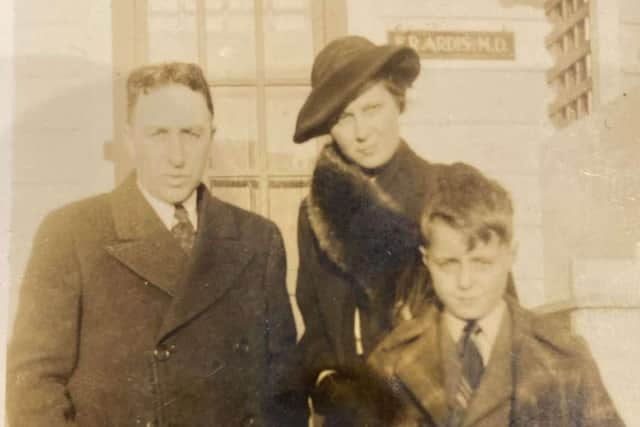

Roger sailed away on the steamship the Duchess of Atholl in August 1940.
He died in 2021 aged 89 and after his death, Sandy decided to go through all of his documents and letters he kept.
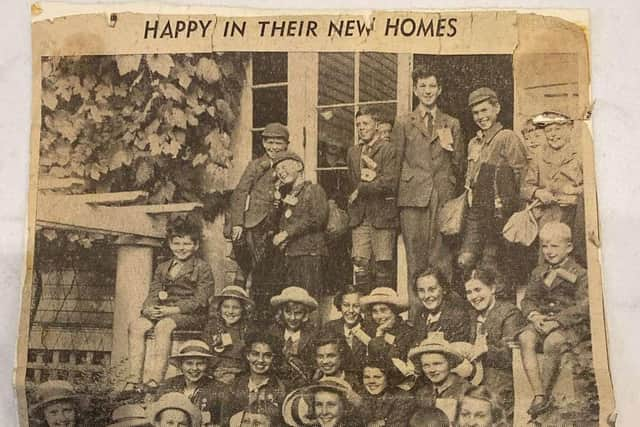
The teacher from Leighton Buzzard said: "I've probably one looked through one per cent of roughly a thousand documents, if not more.
"We always knew he'd been evacuated and there were records but we also knew he had a fascinating story to tell.
"I knew it was emotional for him so I never spoke to him too much about it while he was still here as I never wanted to upset him over things he didn't want to revisit."
Roger lived with his American "foster parents" Bob and Emma Chafitz for four years in Auburn, Massachusetts at the age of eight.

Sandy has discovered his mother wrote to him every week and finding the extent of their correspondence was "incredibly touching".
The mother-of-two said: "I always knew he had documentation and letters about it and towards the end of his life, these plastic wallets appeared. I chatted to him about it where I could but he had Alzheimer's.
"When I got to clearing out his house after he died, I found out all sorts of things.
"When his parents wrote to him, in case those letters got lost, they'd take a copy.
"I've got endless letters from his mum when he was in America - that kind of relationship was very touching to see. It must have been hard to keep a normal mother-son relationship in these letters which could take months to arrive.
"One minute she's talking about nettles and the next minute she's talking about tanks and planes going over.
"She told him there were two soldiers living in his bedroom while they fought the war and they were in houses on every street."
Sandy said the couple Robert stayed with were a childless couple and his 'foster' father Bob was Jewish.
She said: "They rescued one small boy, a refugee from the UK, without really knowing what was happening to the Jewish population in Europe.
"He went from quite a strict homelife to an incredible freedom and opportunity in America.
"He wanted to stay and there was a kind of battle going on between his American parents who loved him dearly and his actual parents who also wanted him back.
"He shared comical stuff with the family – he had a wicked sense of humour.
"He’d tell the odd little joke and his favourite was, that when he went to America, he was a vegetarian and the first meal he had was a plate full of steak.
"He said 'I don't eat meat' and his foster mum said 'You do now kid.' He'd use an American accent which he was good at as he had adapted to it."
Sandy said she feels as if Roger was reluctant to admit his love for his foster parents out of his loyalty to his biological ones.
She said: "He was a loyal person and I'm not sure he wanted people to know how much he enjoyed it out there as he may feel ashamed of that.
"He referred to things as 'our' house or 'our' car.
"He may have just thought this stuff would never be gone through and he may well have kept it for his own pleasure.
"But he might be frustrated by thinking: 'Why wait until I'm gone why didn't we go through it earlier?' I might find stuff he didn't want people to know.
"I've got letters that i havent read through yet about his correspondence about his foster parents when he came home.
"He went back at least twice to see them again. We as a family went back when I was ten and spent three weeks there.
"I've actually met Bob and Emma who looked after him and that was amazing."
One local newspaper picture showed children, including Sandy's father, gathered in a group with the caption the "English children".
Sandy added: "I think the evacuation had a more profound effect on my dad as an adult than I ever knew as a child.
"How that manifested is a double edged sword with some of it positive and some of it negative.
"I have a feeling there was an element of denial in my dad like he was always suppressing stuff. Maybe he was denying himself the luxury of expressing grief."