
Kerbside collections and reuse schemes included in consultation over Central Beds Council's first waste strategy
Central Bedfordshire Council’s Executive has approved the launch of a public consultation on its first waste strategy to shape how waste and recycling services operate for the next 25 years.
However, questions remain about whether residents will continue to be charged for garden waste collections, even after the service becomes a statutory requirement from March 2026.
The Executive (Tuesday, August 5) heard that this Draft Waste Strategy is the council’s first since it was formed in 2009, and it sets out broad objectives to reduce residual (non-recyclable) waste, maximise reuse and recycling, and ensure cost-effective, compliant services that can adapt to future legislative changes.
It also outlines how the council will meet upcoming statutory duties under national waste reforms, including the government’s Simpler Recycling measures.
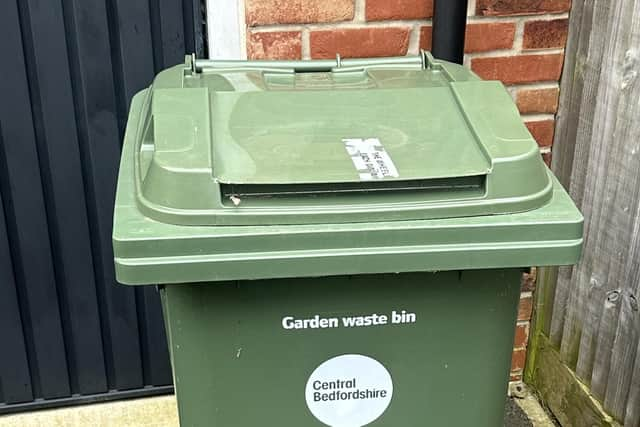

These measures, as stated in the strategy, will require the council to collect a consistent set of materials, including glass, metal, plastic, paper, card, food, and garden waste, from all households by March 31, 2026.
Councillor Eugene Ghent (Conservative, Dunstable West) referred to the upcoming statutory requirement for garden waste collections and asked whether the existing charge for garden waste would still apply once the collection becomes a legal duty.
“The paper seems to suggest that,” he said.
Councillor Tracey Wye, (The Independent Alliance, Potton), the executive member for sustainability and climate resilience, responded: “I think the short answer is no. The strategy doesn’t talk about [how the council will deliver the service].”
Councillor Wye confirmed during the meeting that this is the first waste strategy the council has ever had, despite the authority having been established in 2009. “This isn’t an update… We’re actually doing this for the first time,” she said.
The new strategy focuses on promoting the waste hierarchy, prioritising waste prevention, reuse, and recycling before energy recovery or landfill, and embracing the circular economy by keeping materials in use for as long as possible.
Key commitments in the strategy include:
- Expanding glass and food waste kerbside collections to all households by March 2026
- Introducing kerbside collection of soft plastics (plastic film/bags) by March 2027
- Exploring community-based reuse schemes such as Repair Cafés and Libraries of Things
Councillor Victoria Harvey (Non-Aligned Independent, Leighton Linslade West) praised the inclusion of national targets and asked for more cross-departmental support to help deliver community-led reuse schemes, noting that existing projects lack venues.
Councillor Philip Spicer (Conservative, Eaton Bray) raised concerns about the lack of detail on commercial and industrial waste, especially relating to recycling centre charges.
He pointed out that businesses exceeding 250kg of waste by just 1kg are automatically charged the 500kg rate and called for more flexible pricing bands.
In response, councillor Wye reiterated that the strategy is not a detailed plan but a framework. Implementation specifics, such as operational procedures and charging, will be addressed separately after the strategy is finalised.
The strategy highlights key challenges ahead. The government has set ambitious targets, including eliminating all biodegradable waste from landfill by 2028, recycling or reusing 65 per cent of all waste by 2035, and reducing residual waste per person by 50 per cent by 2042.
Councillor Sue Clark (Conservative, Cranfield and Marston Moretaine) asked how the council would meet these demanding targets.
Councillor Wye acknowledged they were “aspirational” but expressed confidence that “solutions are coming all the time” through innovation in the waste sector.
The public consultation on the Draft Waste Strategy will run from August to October 2025. The final strategy, incorporating public feedback, is expected to be brought back to the Executive Committee for approval in January 2026.