
Faith Matters Column: Faith, belief and practice
It may seem that beliefs define a religion. But the practice of faith, is equally, if not more, important than beliefs. Beliefs are often expressed in creeds or defined by sacred writings. But what is ‘faith’? Is it a set of values or a way of life? Is it trust in God, the universe, people or something else? Can there be a secular faith?
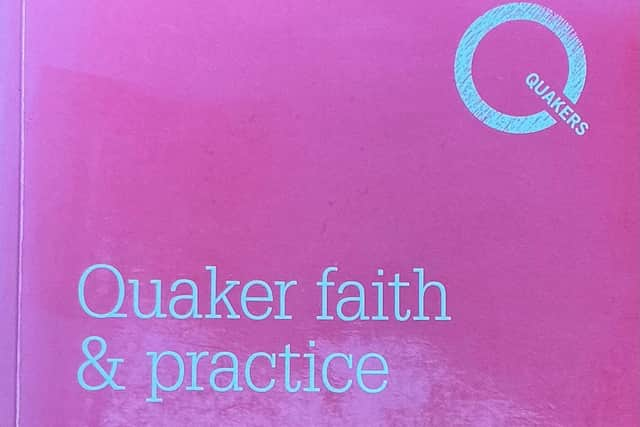

This issue has been raised by the British Quakers’ revision of their Book of Discipline, Quaker faith & practice. This has happened every thirty years or so. It is now reaching a crucial point with the draft of the new text to be offered for comments and reactions this autumn.
Quakers have never been defined by a set of beliefs. Most important for them is personal experience and living out the truth that is known within. The book is a set of rules for the organisation and a collection of experiences of Quakers over the last three hundred years.
Religions change over time. Different strands appear within the broader tradition. There are hundreds of Christian denominations. Within Islam there are Shia, Sunni and Sufi streams. Within Judaism there are orthodox, reformed and Hasidic practices.
Quakers have their origins in Christianity. They emerged at the time of the Civil War in a period religious ferment. But Quakerism has evolved over the past 350 years and has gone through different expressions of faith, including evangelical revival, quietism and liberal theology. Recently there have developed several different strands in the British Quaker tradition so there are Quakers who are also Buddhists, or Pagans as well as those who also share a commitment to another Christian denomination.
For all religions the practice of the faith is vital. Attendance at worship, patterns of praying, caring for others, working to create a just and equal society and a safe and sustainable world are some of the key hallmarks of a life of faith.