
The Linslade child who has grown up to join the This is me campaign to combat appearance stigma
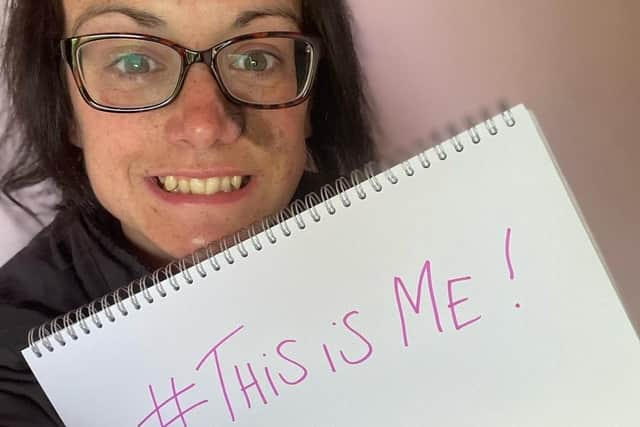
Linslade Changing Faces campaigner Katie Stanton, who has a congenital melanocytic naevus birthmark on her face, would like to see more people like her represented on TV and in ad campaigns to tackle the social stigma around appearance.
Former Cedars pupil Katie, 35, who works in police communications, is sharing her picture and story for Face Equality Week (May 15 – 19) where those with visible differences and facial disfigurements are joining together under the banner ‘This is me.’
A Changing Faces charity spokesperson explained: “They’re refusing to be left out or hidden away and are presenting themselves as the role models they want to see more of.”
A recent poll revealed that more than a third of viewers have never seen anyone with a disfigurement in a television drama with almost half saying they had never seen anyone with a visible difference presenting a news or factual programme. This rises to more than half in recruitment advertising.
Katie recalls: “When I was growing up in the 90s there was no-one like me on TV or in the media.
"I was a happy child but I knew I was different and no-one around me could help me with those feelings.
"Even when I was a teenager and the challenges of having a visible difference became more acute, I didn’t seek advice or support because I had no idea where to start looking.”
The dawn of the internet and social media served to enlighten her but she adds: “We need better representation of difference in the media more widely so that it can be normalised for everyone.

"Better understanding of people with visible differences could mean a cultural shift away from the cruelty we often face, intentional or otherwise.”
Katie says imagining a world where she could confidently get up in the morning, knowing she wouldn’t have to deal with insults thrown at her or embarrassing quizzes from strangers, fills her with hope.
Changing Faces campaigners and ambassadors are taking part in Face Equality Week, alongside members of Face Equality International, to celebrate and champion the rights of those with visible differences and disfigurements to help tackle the social stigma around appearance.
Ambassador Tulsi Vagjiani says: “For too long we’ve found ourselves either ignored by popular culture or presented as victims or villains.
"Some of the most difficult moments I’ve experienced are reactions to my appearance, from trolling online to abusive comments in the street.
"I can’t be sure whether their rude and discriminatory behaviour was due to fear, ignorance or hate.
"But what I do know is that it’s helping to fuel negative attitudes.
“I’m proud of who I am, and I think everyone deserves to see themselves represented positively.
"If I can be the role model someone else needs to see, to help them feel less isolated or alone, then I’ll put myself out there and say ‘This Is Me.’”
Latest research into the views of the public about people with visible differences and representations across popular culture, has also found that 37 percent think adults with a visible difference may experience difficulty in doing things they enjoy, such as hobbies and sports, while 35 percent think adults with a visible difference may experience other having low expectations of their abilities.
Changing Faces chief executive Heather Blake says: “I think everyone can relate to that feeling of being left out, whether it’s being excluded from a game at school, being rejected from job roles or realising you aren’t invited to an event.
"When you have a visible difference, you’re often left wondering if that’s because of people’s thoughts about how you look.
"It’s no wonder people tell us they feel self-conscious and anxious when they’re contending with outdated views, assumptions about their abilities, and a lack of positive representation across society.
“But we know there’s an appetite for change, with three-fifths saying that they, like us and our campaigners, would like to see more people with visible differences represented in popular culture.
"So while brands, businesses, film makers, script writers and marketeers catch up, our campaigners and ambassadors are being the change they and many others want to see.
"We’re asking people to join our celebration of difference, share and support our film* and real stories from our campaigners, so we all get to see positive representations of ourselves.”
Last November the charity secured an apology from the BBC after an episode of the popular quiz Only Connect was aired describing scars as ‘marks of shame.’
Meanwhile the British Film Institute has been an advocate of better representation of visible difference for some years.
In 2018 the BFI committed to not having negative representations depicted through scars or facial difference in the films it funds.
Following the Only Connect incident, Changing Faces has asked the BBC to follow suit and make a similar commitment to that made by the British Film Institute.
Campaigner Katie adds: “Seeing positive role models is hugely important when so many sections of society are telling you that you don’t fit.
"Broadcasters have a role to play, but we can all do our bit too, by recognising that differences should be celebrated and respected.”
> Changing Faces was founded in 1992 by James Partridge OBE, who sustained severe burns in a car fire when he was 18 years old. He wrote about his experience in a book, Changing Faces, and was persuaded to set up the charity after speaking with doctors from University College Hospital in London.
It supports and represents children, young people and adults who have a visible difference to the face, hands, or body, whether present from birth or caused by accident, injury, illness or medical episode. It campaigns to change public opinion and combat discrimination.
It provides psychological support for people with disfigurement through advice, information, counselling, and workshops across the UK.