
Campaigners claim trial closure of Aspley Heath byway is 'wasting taxpayers' money'
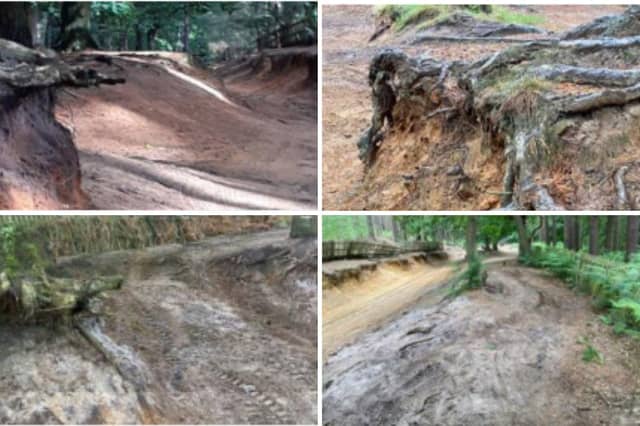

A campaign group claims a trial closure of a Central Bedfordshire byway has led to the local authority wasting taxpayers’ money on an unnecessary legal battle.
But Central Bedfordshire Council says the decision to block off Sandy Lane in Aspley Heath was taken “to address anti-social behaviour, such as fly-tipping, the use of unsuitable vehicles and instances of racing”.
An experimental traffic regulation order was implemented earlier this year, after being agreed at a CBC traffic management meeting in January. The council acknowledged this order “can be modified or removed at any time, should the need arise”.
Sandy Lane is described by the Green Lane Association as “one of the county’s last byways open to all traffic”. Users of this route suggest that closing lanes encourages fly-tipping and anti-social behaviour.
A CBC spokesman said in a statement: “This matter was considered at a traffic management meeting in January.
“The experimental traffic regulation order has been in place since May, and people may comment on it online. The council won’t comment about any ongoing legal case with the Green Lane Association.”
Chris Mitchell, who chairs the association, explained: “Closing Sandy Lane doesn’t solve problems. It makes them worse.
“The more lanes that are closed, the more pressure is put on the remaining ones. Instead of wasting more taxpayer money on repeated legal battles, the council should work with us to keep this lane open for everyone.”
More than £100,000 of taxpayers’ money could be wasted if legal action continues, claimed the association. “Closure ironically worsens the very issues the council claims it wants to prevent, but CBC appears to be ignoring these concerns.
“Clearly losing these lanes to motorised vehicles directly limits access for disabled people and affects their ability to enjoy the countryside on equal terms with able-bodied people.”
A byway open to all traffic is a public path for walkers, cyclists, horse riders, and all vehicle types, often lacking a pavement.
A statement of reasons for the decision on the CBC website said: “The decision has been made to prohibit all motorised vehicles to address reported inappropriate usage of Sandy Lane byway.
“That includes anti-social behaviour, such as fly-tipping, racing and use with unsuitable vehicles, which have damaged the road surface.
“The prohibition of motor vehicles will prevent all motorised vehicles from using the byway, and this will be enforced using a coded gate and bollards. This allows the council to monitor the scheme and assess its impact on addressing the anti-social behaviour and on the wider local area.
“We chose to implement this as an experimental order as it may need to be removed quickly, if the prohibition of motor vehicles has negative side-effects or is found to be ineffective.
“It’s anticipated that restrictions may need to be amended and we consider it more effective to consult with the order in place, rather than being theoretical.
“It’s proposed the experimental order will be in operation for up to 18 months. CBC will consider in due course whether the provisions of this order should be continued indefinitely.”